

Lately I’ve been reading Olivier Hamant, a French a biologist and research director at INRAE (French National Research Institute for Agriculture, Food and Environment). I won’t tell you about his whole body of work, but his central argument is that living systems are not performant nor performance-driven: life, as a whole, is inefficient, redundant, slow, unpredictable, and often suboptimal. Yet it is these apparent “underperformances” that give them the room to be fluid enough & allows them to remain robust in unstable environments. That really lit me up, because as you already know, I am obsessed with near enemies. Reading his work, what I understood is this:
Being productive is the near enemy of being alive.
Liberation Practice Field is an 8-week course designed for us to live deeper in our collective aliveness. The more we feel alive, the more those systems are untenable, the more we want to protect and honor life. The goal of this course is for you to bring more aliveness into your relationships. I hope you will join us. THE DOORS CLOSE ON OCTOBER 11th!!!!
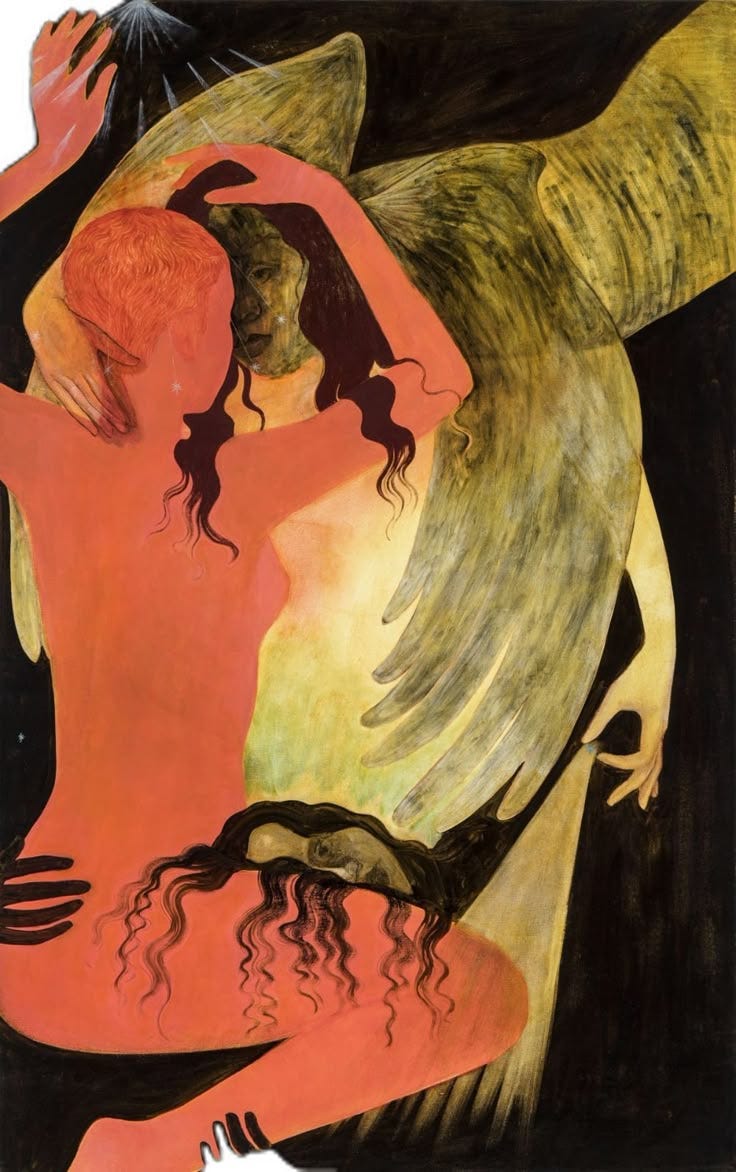
Productivity imitates the movement of life but only strips away the inefficiencies that make life possible.
I am writing this to say: I hope that throughout moments when you need to be productive for the sake of surviving late stage capitalism, you find moments to be wildly unproductive. I hope you find yourselves in moments where you are wide awake to your own aliveness.
It is important to be alive, fully embodied, whatever that looks like for you right now, because it is the best way—if not the only way—to resist systems of oppression.
Embodiment is the beginning and the core practice of liberation that abolition requires.
Every system of domination teaches us to abandon the body: to distrust what we feel, override our limits, silence our needs, endure what hurts and measure our worth through our productivity. This is why we are called crazy for feeling our feelings and trusting our intuition, and this is why they call themselves the victims when we name and resist injustice. Abolition must begin by restoring the body as a site of knowledge, dignity and choice. Otherwise, we may dismantle oppressive institutions while continuing to reproduce their logic through the ways we relate to ourselves, to the land and one another.
Embodiment is where abolition stops being only something we believe and becomes something we practice. It is how liberation travels from our politics into our habits, our relationships and our everyday lives.
You see, there is a force that sends baby lizards running toward the river the moment their eyes open, without instruction, without explanation—an intelligence that arrives before thought. The same force that keeps your breath moving while your mind is elsewhere. The same one that draws roots downward through soil, that lets fungi weave vast underground networks, that holds the Earth in its precise turning—near enough to the sun to warm us, far enough not to burn us, in quiet relation with the moon. We give all of this a single, special name: Life.
Empires learned early that this force—what we call life—was most visible, most undeniable, in bodies that could birth it. And so religion became a technology of distance: a way to move power away from flesh, to abstract it, to relocate it elsewhere—above, beyond, outside—so the body itself could be managed.
Because! Another near enemy I have been thinking about lately:
The near enemy of embodiment is morality.
Liberation Practice Field is a course that gives your body the tools and practice it needs to meet familiar relational experiences from a new position—one where you have access to your dignity, agency, power and choice. Doors are open until October 11th!
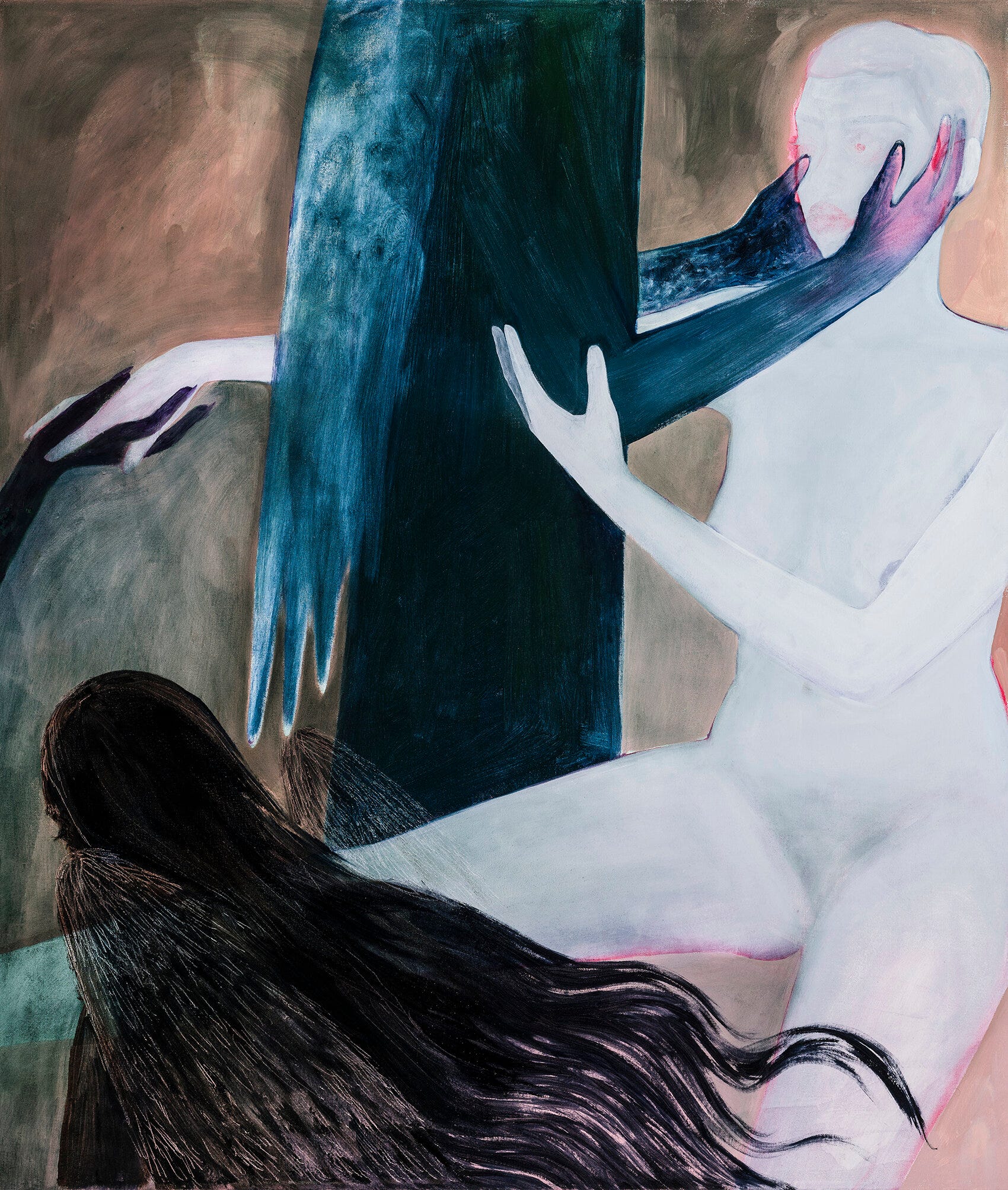
Morality is a near enemy of embodiment because morality requires us to replace our own body’s discernment with an external system of judgment (often created by a man who, let’s put it this way, doesn’t really give a damn about our interest and is much more worried about his own). Instead of listening to our own inner compass, we are constantly required, through shame and judgment, to leave our bodies and perform goodness and morality so that we can escape what threatens to come right after it: punishment.
While morality is asking us to turn inward and stay in connection with folks around us “what is happening inside me? What do I feel? What do I need? What impact am I having? What response would preserve dignity, connection, & responsibility? How do I stay in contact with the folks around me who make me possible?”, morality is more concerned about managing how we appear and controlling others: “Am I good or bad? Are they innocent or guilty? What am I supposed to feel? What would a good person do?”
And so here we are, overriding anger because “good people forgive.” Denying desire because it seems too much or selfish. Performing accountability because we need to remain good or innocent. Rushing toward certainty because ambiguity makes our goodness feel unstable… or too human. Our body may be saying no! I don’t want this, I don’t believe this, slow down, I am hurt, or I caused harm and I want to repair, morality from above or around teaches us to reach for the answer that we believe will protect our identity.
I know what you might think, and if, right now, what you’re scared of is that without morality, the world would be even more of a mess than it is now, I want you to know this: we can only reach those corners of our own cruelty because we are so disembodied. There is everything in a body, even cruelty. But if it would be morality that would keep us from fishing there, we would know. Embodiment doesn’t deny cruelty, it looks at it right in the face, so that cruelty doesn’t become the engine of our becoming.
Embodiment does not mean leaving behind any kind of ethics. It means refusing to confuse ethics with purity. Ethics emerge through somatic attention: to context, power, consent, consequences, capacity, and most importantly: to relationship. Embodiment requires relationship, but morality only requires complete obedience and submisson.
Morality is really practical to control lots of people because it offers the comfort (a near enemy of safety) of knowing who is right or wrong, it gives us rules to follow so we never have to enter the vulnerability of relationship at all. It’s a great strategy when we know that what protects the people from its rulers is solidarity.
While morality offers a safe path toward punishment, embodiment requires us to remain present long enough to discover what responsibility asks of us.
This is why morality is a near enemy of embodiment: it performs the clarity of embodied integrity without ever requiring the vulnerability of actually feeling. And the truth is, when we truly feel from the depth of our pelvis, we realise that what they call good or the truth is much more complex than a binary could ever sell. Truth doesn’t really care about punishment nor salvation. Truth knows that there is no salvation from harm, from being human, from being born in this world. Feeling requires an intimacy with our tissues, an intimacy with the land, and intimacy with others that morality could never comprehend. Feeling requires a kind of humility and humility that can only be found in the flesh. Morality is actually a near enemy of intimacy, too.
Morality gives us rules where all we need is relationship, judgment where we all need is curiosity, and innocence or fault where all we need is accountability.
When we perform morality, what we’re truly interested in is to prove that we are good. Put more simply, that we do not deserve punishment. Embodiment doesn’t care about performing goodness. Being embodied means staying present to what is here, what is real and true, including the truth that requires us to change to meet the moment with more honesty.
When our inherent power is displaced from the body and lodged in concept, doctrine, it becomes governable. When it remains in flesh—felt, breathing, desiring—it refuses administration. It simply will not obey.
Liberation Practice Field gives you concrete somatic and relational abolitionist tools to bring into the relationships and communities you already have, so that your politics do not remain something you understand intellectually but become something your body knows how to practice when it matters most.

The greatest threat to any empire has always been the body—remembered, inhabited, alive. A body that feels. A body that wants. A body that knows itself as sovereign.
This is why I am a somatic practitioner. Not to make you calm. Not to make you compliant. Not to regulate you into tolerating what is intolerable. I have no interest in soothing people into surviving systems that were never meant to keep them alive.
I don’t care about making you anything. I care about aliveness and alignment.
Because a body that is alive cannot be governed. An aligned body knows when something is wrong before language arrives. An aligned body does not confuse regulation with obedience, or calm with consent.
Somatics, for me, is not about peace. It’s about truth.
Somatics is a practice of self-belonging—for people who have been named slaves, servants, witches, terrorists; for people who have been displaced again and again; for people taught to abandon themselves in order to survive.
And yes, this is threatening. And it’s not “nice”. Becoming more embodied means those systems become more and more untenable. Honestly being more embodied is kinda shit, especially now. It is the whole point.
Somatics is not about regulation for compliance, its the practice of becoming ungovernable.
Liberation Practice Field is now open for the Fall 2026 session.
WE START OCTOBER 11th !!
Liberation Practice Field is an 8-week course designed for us to live deeper in our collective aliveness. The more we feel alive, the more those systems are untenable, the more we want to protect and honor life. The goal of this course is for you to bring more aliveness into your relationships. I hope you will join us.
Stay ungovernable,
Care
I believe there's a typo: should "while morality is asking..." say embodiment instead?