

Welcome to The Question Underneath —with Care, my advice column where I answer your questions about love, conflict, heartbreak, grief, and how conflictual it is to be in a human body. This column isn’t about giving answers. It’s about slowing down long enough to hear what a question is really asking.
I’ll respond to one or reader question—not to tell you what to do, but to help return agency where it belongs. You can write to me with whatever you’re circling: a conflict you can’t resolve (internal or external), a regret you can’t release, a pattern you keep repeating.
In this installment, I respond to A., who is raising the tension that happens when one is leaving the frontlines but still want to be in active political praxis in community.
I’d love to hear your thoughts in the comments section!

Today I’m answering A., who asked:
Would love to talk about what to do when you leave the frontlines but still want to be in active political praxis in community.
At the end of the answer I crafted for A., you’ll find a somatic practice for paid subscribers. This practice is meant to help you:
downshift the nervous system from urgency
differentiate intensity with belonging
let the body sense where it wants to move now
Thank you for making this work possible!
Dear A.,
On the surface, what you’re touching here sounds logistical. I fI had to shape it as a question, I’d say:
How do I stay politically engaged if I’m not on the frontlines anymore?
But somatically, historically, spiritually — this question is touching something deeper.
Before we go there, let’s talk about what the frontlines actually mean.
For many of us, the frontlines are the streets. The chanting. The megaphone singing. The feeling of bodies pressed together in shared refusal. There is a reason one of the first rights to go out the window is our right to gather. Gathering is power. It is memory. It is re-membering our power together.
Some of the most soma-opening experiences of my life have happened in protests. I have laughed louder than I ever have. I have cried in ways that felt cellular. I have been held by strangers like we were kin. I have seen babies strapped to chests while their caregivers chanted for a future they may never see but still fight for.
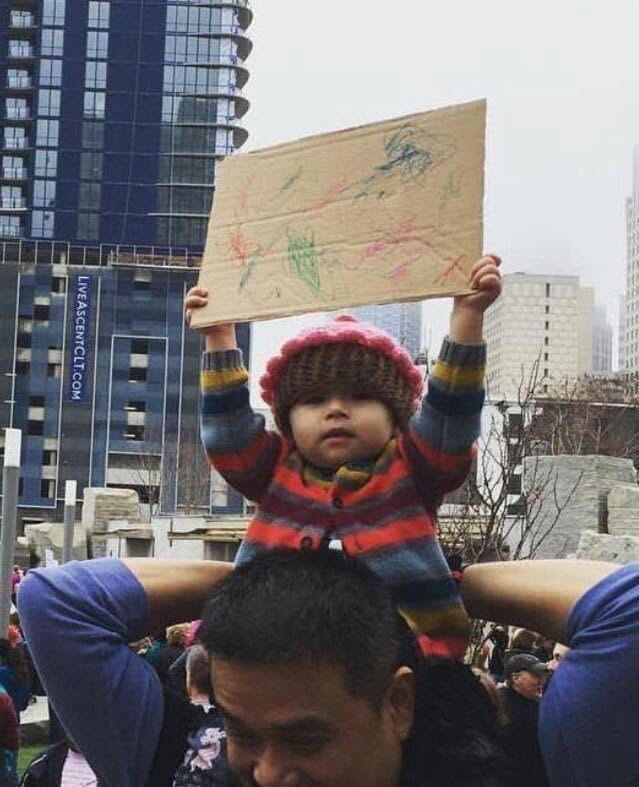
The frontlines are sacred. They are not frivolous. They are not symbolic fluff. They are potent.
And, also.
Abolitionist history reminds us that the most transformative political work has never only happened in the streets.
It has also happened:
In kitchens.
In study groups.
In childcare rotations.
In grief circles.
In land-based rituals.
In quiet infrastructure-building.
In the slow repair after harm fractures a movement.
Not everyone is meant to be a shield. None of us can be a shield forever. But all of us, eventually, become soil. We’re here to die: figuratively and literally. All ways and forever. We live in circles not in lines.
From here, I want to turn toward what’s living underneath your sentence — politically, biographically, somatically, and spiritually. Because when someone says, “I still want to be in active political praxis,” I don’t just hear logistics. Still implies that something might have been lost. It’s almost as if the sentence is trying to defend itself before anyone has accused it of betrayal. Or maybe point towards the betrayal we all feel when we feel like we’re changing?
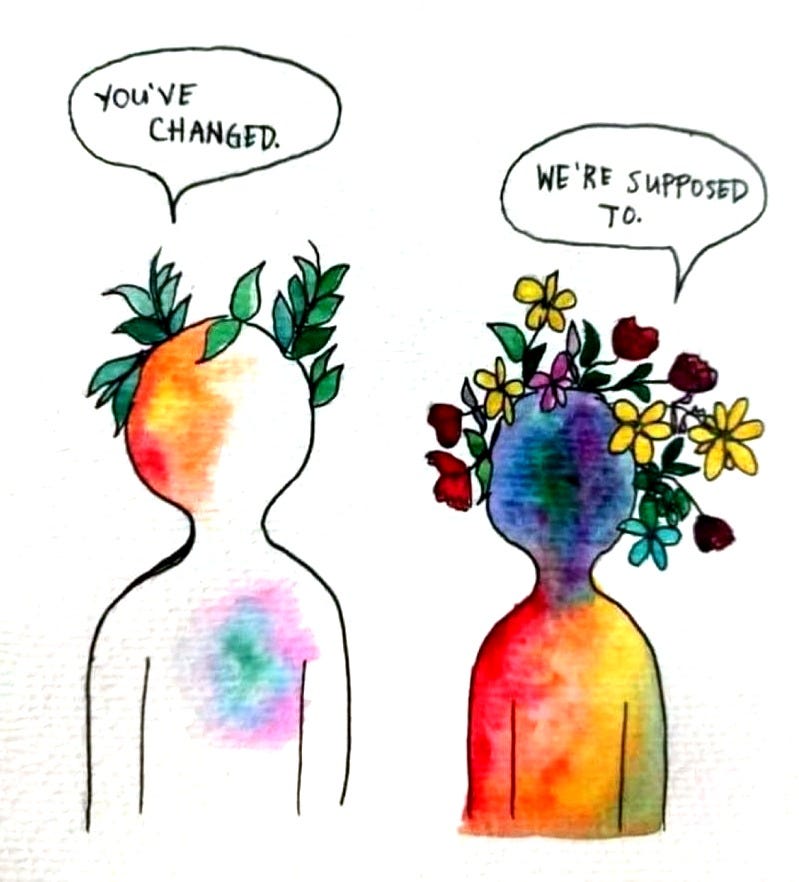
What I hear is: a nervous system recalibrating. A life story brushing up against a threshold. A political identity shifting shape. A spirit asking what season it’s in.
The Political Layer
Of course we have to look closely at the political layer. Late capitalism and racial capitalism reward visible sacrifice. They romanticize exhaustion. They turn urgency into virtue. And they absolutely rely on activist burnout as part of their continuity. A system that feeds on extraction will always be happy to extract from the very people trying to dismantle it.
Movements, however, do not only need martyrs. They need archivists who remember what we fought for when the news cycle moves on. They need mediators and conflict facilitators who prevent us from reproducing the state inside our own relationships. They need fundraisers and logistics people who make sure the lights stay on (money is a topic we need to talk about more in our spaces!). They need ritualists and grief workers and long-haul thinkers. They need the ones who repair harm quietly. They need incredible cooks, and farmers who know how to take care of our soils. They need the ones who make us laugh in the middle of collapse. They need the ones who remind us how unbearably beautiful it is to be alive together at all.
We have to interrogate what we were taught counts as “real” engagement. Who benefits from equating visibility with commitment? Who benefits when the most impacted people burn out first? Spectacle is seductive because it is legible. It photographs well. It feels immediate. It gives us the rush of impact. But movements are not sustained by adrenaline alone. They are sustained by infrastructure, by repair, by study, by rest, by relational depth, by people who are willing to stay long after the chant has faded.
I say this often in organizing spaces: we are not only fighting to survive racial capitalism. We are also trying to heal from the trauma of living under it. That includes practicing something different while still needing to participate in it to survive. If our political engagement keeps us in chronic fight mode, if the only thing it mirrors is the very extraction we are resisting, then something is misaligned. Stepping off the frontlines does not mean stepping out of struggle. It may mean refusing a narrow and impoverished definition of what counts as engagement. Breathe out: this is where abundance comes back in the chat.
So the question becomes: what does my political identity become when it is not tethered to adrenaline, visibility or a scarce definition of what political means? Who am I when I am not publicly bracing or shrink? In other words: who am I when I refuse to believe in the scarcity lies that facism is built upon?
You mention wanting to stay in touch with community. It makes sense that you associate community with the frontlines. Strong emotions like rage, grief, anger, joy—those emotions act like glue. There is something profoundly bonding about standing shoulder to shoulder against a common enemy. The nervous system locks in. The rhythm of chanting synchronizes breath. Shared danger can produce a powerful sense of belonging. We see similar bonding dynamics in the military by the way (!); intensity fuses people together. Being against something/someone together can feel like the clearest proof that we are together at all. In a society that is constantly denying us of any sense of belonging, or offering us a cheap near enemy (like fitting in), this is gold. If you look closely to how the military hires people you will notice it: what they sell first and foremost is belonging. The state has perfected its capacity to refuse us our inherent needs of safety, dignity and belonging while offering us their near enemies: it offers comfort and survival instead of true safety, a chance to fit in or assimilate instead of true belonging, a chance to comply instead of true dignity.
On the frontlines, many of our emotions are finally fully expressed. At work we are contained. In family systems we replay the childhood scripts we were given. But in the streets, we get to be loud, messy, righteous, tearful. All of it is welcome. That kind of emotional permission can feel like home. It feels like… being human.
So when visibility decreases and you are no longer surrounded by hundreds of bodies mirroring your outrage or your hope, something vulnerable surfaces. If I am not there, chanting, sweating, crying with everyone—do I still belong? If I am not as visible, am I still legitimate? Will I still be loved in the same way?
Those are real questions about belonging.
Or maybe even more precisely, they open into this:
how do I bond deeply with people without the rollercoaster of the frontlines?
Because that’s what the streets can feel like. A rollercoaster. The spikes of adrenaline. The collective roar. The fear/the euphoria/the tears/all our nervous systems syncing up/the relief/the sudden intimacy with strangers. The sense that something historic is happening and you are inside of it. Intensity accelerates bonding. It compresses time. It makes people feel fused.
But rollercoasters are not built for permanence. They are designed for peaks and drops.
So underneath your sentence, I hear something exquisitely human:
if I step off the ride, how do I still feel close? How do I still feel woven in? How do I build intimacy without crisis as the glue?
And so inside this question what I believe your nervous system is quietly pointing to is the fatigue that the rollercoasters might bring to you, somatically.
The frontlines give us intensity. Community asks for intimacy. While we can build intimacy at the frontlines, they are not always a given.
Intimacy is often quieter than intensity. It can even feel anticlimactic at first. There is no megaphone. No synchronized chanting. No immediate feedback loop telling you that you matter. There is just repetition. Showing up. Staying in conversation. Letting yourself be seen outside of your most activated self.
So perhaps the deeper question becomes:
Can I tolerate connection that is not electrified by emergency? Can I let myself belong in spaces where my nervous system is not bracing?
Can I build bonds that are not forged by a shared enemy, but by shared becoming?
The Somatic Layer
Somatically, I want you to notice what your body felt when you left. Was there relief? Collapse? Guilt? Did your shoulders drop or did your chest tighten? Did your sleep change? Did your digestion? Did you feel sadness, resentment, anger, grief, joy? Our bodies often exit long before our minds give themselves permission. Sometimes leaving the frontlines is the body saying: I can’t do this this way anymore.
Because you are part of my program, and because I know the intersections you’re navigating, I’m actually relieved that your nervous system is asking for a shift.
The nervous system cannot live in perpetual emergency.
The state manufactures urgency to keep us in chronic fight-or-flight. The frontlines can become both a response to that urgency and an extension of it. And while that fire can be clarifying, it cannot be sustained indefinitely without cost.
When someone leaves the frontlines, it is rarely apathy. More often, it is the body whispering: I am carrying too much. I cannot metabolize this pace anymore.
If your body pulled you back, that is somatic intelligence.
Chronic fight mode can masquerade as moral superiority. It can feel like devotion. But sustainable praxis requires parasympathetic capacity — reflection, connection, long-range thinking.
Revolution without regulation collapses into burnout. Or worse, into harm within our own spaces.
The great news here is this: there are plenty of people willing to be on the frontlines. Just like we stepped up years ago, decades ago—sometimes trembling, sometimes reckless, sometimes beautifully unprepared—we have to trust that generations after us can step up too.
There is a particular kind of humility in that trust that I think we’re sometimes lacking in our movements.
Movements are intergenerational by design. We are not meant to be the fire forever. We live in circles, not in lines. And if you are lucky enough to be around young people organizing right now, you might notice something that soothes you: their clarity, their audacity, their refusal to accept crumbs, their willingness to risk rupture when it’s necessary. You might feel, almost surprisingly, that the future is not fragile in their hands.
There is something deeply regulating about watching younger folks say, “We’ve got this.” Not because they won’t make mistakes—they will. We all did. But because their willingness to fuck it all up when it’s time reminds us that courage is renewable.
Trusting that others can step forward is really important because I think it’s part of the necessary work of decentralization. It is refusing the savior script. It is allowing the movement to breathe beyond our individual body.
And maybe part of your nervous system asking for change is also asking you to release the illusion that everything depends on you.
Because it never did!
I’ll end the somatic layer by sharing with you what came up somatically for me when I first read your sentence: it seems like your soma is ready to deepen instead of widening. You’re ready for more stillness. Both are necessary, both can be generative and destructive. What I find is that when we stop widening and start deepening, the changes are less visible but spiritually life changing.
The Biographical Layer
I have no idea from your sentence whether you left the frontlines because of fatigue, changing life circumstances, financial pressure, disability, disillusionment, or simply because your body reached a threshold it could no longer override. There are so many valid reasons to step back. And still, in the years I’ve spent inside organizing spaces, I’ve noticed a pattern that is hard to ignore.
The people who remain on the frontlines long past what their soma can sustainably hold often carry particular biographies. The parentified child. The eldest daughter who translated chaos into order. The survivor who learned early that vigilance equals safety. The one who became “the strong one” before they were ever allowed to be soft. Hyper-responsibility doesn’t feel like a wound when you’re young; it feels like competence. It feels like identity. It feels like love earned through usefulness.
So when we step into political struggle—especially struggles that are urgent, embodied, life-or-death—those old neural pathways light up. The crisis feels familiar. The intensity feels clarifying. The nervous system says, oh, right, I know how to be the missing piece to this puzzle!
Frontline work can unconsciously mirror childhood dynamics with eerie precision. The chant replaces the household tension. The adrenaline replaces the constant scanning. The vow underneath is the same: if I don’t hold it, everything falls apart.
That sentence is rarely about the movement alone. It is about the kitchen table. The unstable caregiver. The siblings you protected. The unspoken contract you signed in childhood: I will over-function so that we survive.
So when you leave, or even consider leaving, something ancient can get activated. If I stop, I become irrelevant. If I rest, I lose love. If I’m not needed, who am I? These fears are not political strategy questions. They take us back to attachment wounds.
Because if love in your early life was conditional—tied to performance, emotional labor, invisibility, endurance—you may unconsciously recreate those conditions in your organizing. You may equate visibility with value. Burnout with devotion. Exhaustion with proof of commitment. You may struggle to receive care from the very community you are fighting for.
And stepping back threatens that whole architecture.
Leaving the frontlines can feel like breaking a lifelong promise: I will be indispensable so that I am allowed to belong.
But what if belonging was never meant to be earned through depletion? What if political maturity includes learning to trust that the world does not collapse when you soften your grip? What if the deeper work is not proving your commitment through endurance, but rewiring your nervous system to believe that you are worthy even when you are not bracing?
That shift is not only political. It is biographical repair. And sometimes stepping away from the frontlines is less about disengagement and more about refusing to let your childhood survival strategy run your adult liberation work… whether you are on the frontlines or not.
The Spiritual Layer
Spiritually, this question feels like it’s holding something much older than strategy. It feels like it’s asking: what season am I in?
Because not every season is meant for fire.
Yes, the frontlines are fire. They are heat, urgency, combustion, visibility. They purify. They illuminate. They destroy what needs to be destroyed. Fire is sacred. But nothing can live in constant flame.
Community infrastructure is earth. It is slow, patient, often invisible. It is compost and root systems and the quiet tending that makes future growth possible.
Education is air. It moves between us. It sharpens thought. It carries language and analysis and imagination across bodies and generations.
Grief work is water. It softens what has hardened. It allows mourning to move instead of stagnate. It makes room for love to return after devastation.
You are not required to be fire forever.
There is no single correct form of devotion. Spirit does not only recognize the loud offering. It recognizes consistency. It recognizes integrity, humility and surrender. It recognizes the one who keeps tending the soil long after the spotlight has moved on.
Even in nature, ecosystems collapse when one element dominates. Too much fire and everything scorches. Too much water and roots rot. Too much air and nothing anchors. Too much earth and nothing moves. Balance is not aesthetic — it is survival.
So instead of asking, how do I stay active if I’m not on the frontlines, maybe the deeper inquiry is: what kind of political ancestor am I becoming? Not just what am I doing this month, but who am I shaping myself into over decades? What stories will my nervous system carry? What culture will my body model for those watching me?
And perhaps the most intimate question of all: what form of contribution aligns with my nervous system’s sustainability? Not what earns applause. Not what photographs well. Not what proves commitment. But what allows me to stay in right relationship with my body, my community, and the long arc of being a death doula to the empire within, while witnessing others lay theirs to rest?
Who do you become when you’re not needed?
I am glad you are listening to your body in this new season you’re in, and as someone who has witnessed many people leaving the frontlines (for many different reasons but mostly because of trauma, fatigue, disability and disillusionment or burn-out), I can tell you this:
People leave to continue doing the exact same thing they were doing before in another form.
They leave to do what was lacking in the spaces that burned them out.
Often those two things are one and the same.
What did people repeatedly thank you for bringing into those spaces?
And what did you still feel was missing there?
Concrete possibilities (without romanticizing withdrawal!!!)
Staying in praxis might look like:
Political education circles
Conflict repair inside movements
Mutual aid logistics rather than public-facing roles
Supporting organizers financially, emotionally, spiritually, physically (like cooking!)
Practice expanding the body’s capacity to hold abundance, pleasure, and the erotic without bypassing grief, complexity, or reality — and support others in building that capacity too.
Deep relational work so movements don’t fracture (our movements depend on our relationships, so relationships work should be at the center of our care)
Rest as strategic infrastructure
Skill building for the long game
Taking care of the earth, the most vulnerable, our elders, raising amazing kids in their full sovereignty and dignity…
Leaving the frontlines is not leaving the struggle. It may be leaving what’s most visible.
But spectacle is not the same as power.
To conclude,
I want to remind you that whatever you are doing and as long as the empire is alive, you are steeped in political praxis, whether you like it or not. Praxis simply means the ongoing alignment between your values and your actions inside real relationships and material conditions.
So the question becomes less “How do I stay involved?” and more “Where does my energy create the most integrity and sustainability now?” (now being the key word here).
What is it that you do great? What is it that you like doing? How are your skills directly responding to the shit show we’re left dealing with?
Your purpose is to beat fascism and live free. Your purpose is to live your best life ever yet. Those two things are one and the same.
Down below you will find a somatic practice to help you unplug from urgency, sit in your inherent right to belong and sense where the body wants to move now.
Stay ungovernable,
Care
Have a question for Care?
Just fill the form here.
Include your question with the information you believe is necessary for me to answer thoroughly. Make sure to offer up a pseudonym, or indicate the name you’d like me to answer to as well as your pronouns.
What I love to answer:
The question you can’t stop thinking about, the one that keeps coming back to the shore of your skin
The question you keep avoiding.
Those are usually the ones that matter.
A few things to know before you send:
I may lightly edit questions for clarity or length, but I’ll keep the heart of what you’re asking intact.
Make sure to offer up a pseudonym, or indicate the name you’d like me to answer to as well as your pronouns.
Although I do read each one, I probably won’t be able to answer all of them. If I choose yours, I will answer with all the information and heart life allows me to access in this present moment.
What This Column Is / Isn’t
This column is:
reflective, relational, somatically informed
grounded in accountability and abolitionist care
oriented toward agency rather than reassurance/validation for the sake of it
This column is not:
quick fixes
moral judgment
therapy
crisis support
advice about who’s right or wrong
a place for public shaming or surveillance
If your question feels unfinished, uncomfortable, or hard to phrase, that’s usually a good sign.
Stay ungovernable, and thank you for entrusting me with your question,
Care
Somatic Practice of the Week:
how to unplug from urgency, still belong and sense where I need to move now?
