

What happens when the people committed to tearing down the world’s prisons cannot bear to look at the prisons inside themselves?
What becomes of a movement for liberation when its architects (we!) are terrified of conflict?
These are not abstract questions. They are the quiet, corrosive truths that live in our organizing spaces, our friendships, our beds. They are the reason our movements fracture and our hearts break.
The world we long for requires a relational resilience most of us were never taught to cultivate. We learn to fracture, to ghost, to prioritize a fragile peace over the difficult, tender work of repair. Our private patterns of conflict avoidance have the power to expose our whole cycle of trauma but when unconfronted, become the blueprints of our political systems—policies designed to enforce avoidance, separation, and disposability, the same logics that condition us to accept genocides. We cannot learn to navigate rupture with courage and care, the liberatory futures we seek will remain forever out of reach.
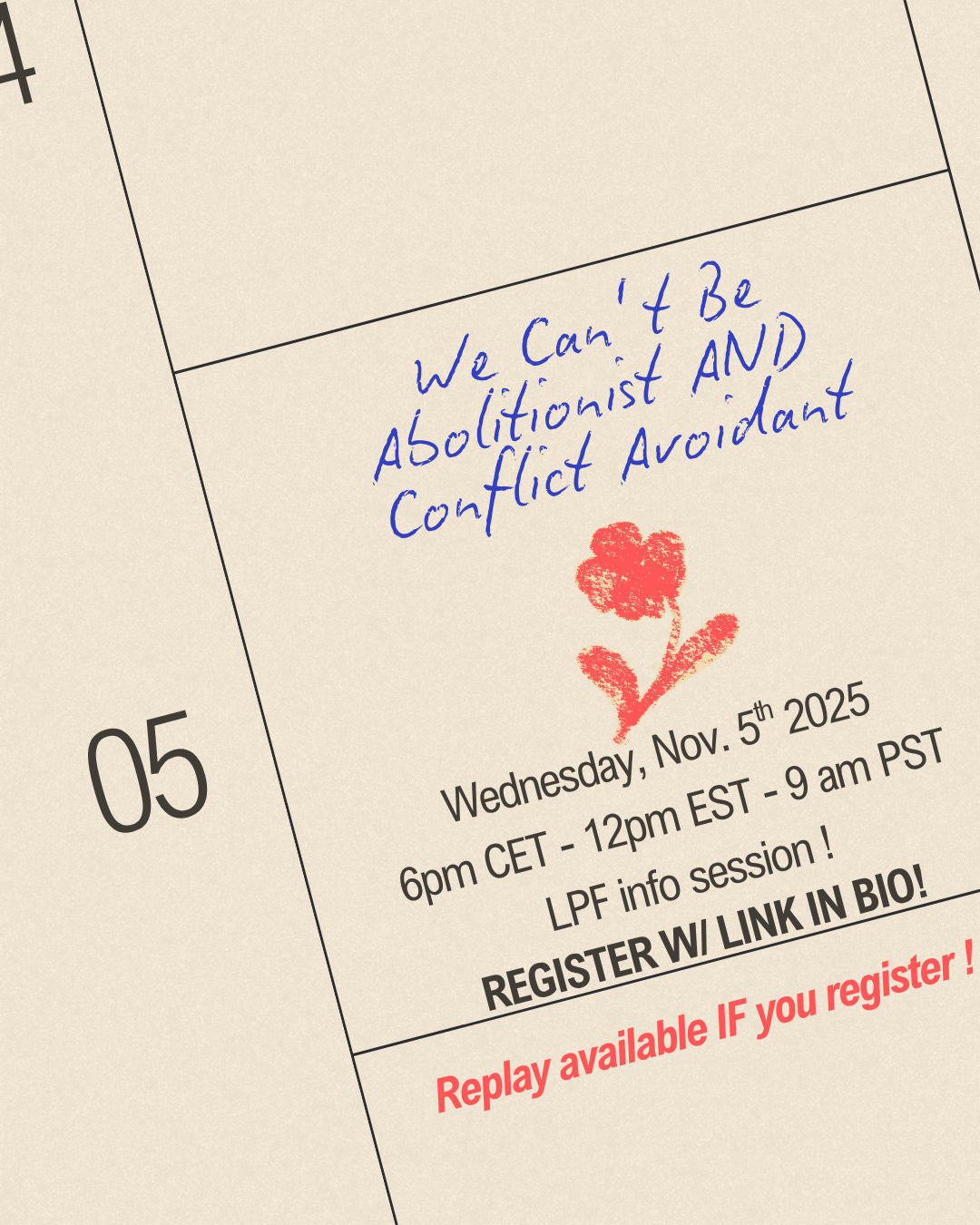
THIS NEXT WEDNESDAY, I will be offering a FREE mini-workshop called:
We Can’t Be Abolitionist AND Conflict Avoidant. Click here to register (REPLAY AVAILABLE ONLY IF YOU REGISTER !!!)
In this workshop, I’ll introduce Liberation Practice Field (including Guest SPEAKERS!). If you have questions around LPF, this is for you !
PS: if you’re not coming, at least take my free QUIZ to know which conflict archetype you are !
SEE YOU THERE!
So much of this resonates. We can't expect to engage in meaningful conflict externally without examining our patterns. We won't be able to build the power necessary to fight back collectively.
I'm also doing a workshop similar to this next week titled, "Crash Out Diaries: Conflict as a Tool for Community Growth"
Love this line: “The world we long for requires a relational resilience most of us were never taught to cultivate.”
Can I borrow it? 👀